Unlocking Business Value Through AI: Opportunities and Enablers
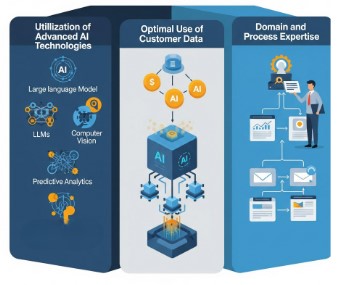
The rapid evolution of artificial intelligence has created unprecedented opportunities across industries. From pharma and manufacturing to retail, CPG, and insurance, AI is becoming an indispensable tool to drive operational efficiency, unlock customer insights, and accelerate innovation.
As businesses navigate this AI-driven transformation, the question isn't whether to adopt AI, but how to do it strategically to maximize business value while minimizing risk and complexity.
The AI Opportunity Landscape
1. Operational Efficiency at Scale
AI-powered automation is revolutionizing how businesses operate. From intelligent document processing that reduces manual data entry by 80% to predictive maintenance systems that prevent costly equipment failures, AI enables organizations to:
- Streamline repetitive processes through intelligent automation
- Reduce operational costs by optimizing resource allocation
- Improve accuracy by eliminating human error in routine tasks
- Scale operations without proportional increases in workforce
2. Enhanced Customer Experience
Modern customers expect personalized, responsive experiences. AI enables businesses to deliver on these expectations through:
- Personalized recommendations that increase customer satisfaction and sales
- Intelligent chatbots providing 24/7 customer support
- Predictive analytics anticipating customer needs and preferences
- Dynamic pricing optimizing revenue while maintaining competitiveness
3. Data-Driven Decision Making
Organizations sitting on vast amounts of untapped data can leverage AI to transform information into actionable insights:
- Pattern recognition in complex datasets revealing hidden opportunities
- Predictive modeling for demand forecasting and risk assessment
- Real-time analytics enabling agile business responses
- Automated reporting freeing up human resources for strategic work
Industry-Specific AI Applications
Healthcare & Pharmaceuticals
- Drug discovery acceleration through molecular analysis
- Medical imaging enhancement for improved diagnostics
- Patient outcome prediction for personalized treatment plans
- Clinical trial optimization reducing time-to-market
Manufacturing & Supply Chain
- Quality control automation using computer vision
- Demand forecasting for optimal inventory management
- Predictive maintenance minimizing downtime
- Supply chain optimization reducing costs and improving reliability
Financial Services
- Fraud detection with real-time transaction monitoring
- Credit risk assessment using alternative data sources
- Algorithmic trading for improved investment returns
- Regulatory compliance through automated monitoring
Retail & E-commerce
- Inventory optimization reducing waste and stockouts
- Customer segmentation for targeted marketing campaigns
- Price optimization maximizing revenue and competitiveness
- Recommendation engines driving cross-sell and upsell opportunities
Key Enablers for Successful AI Implementation
1. Data Infrastructure and Quality
The foundation of any successful AI initiative is high-quality, accessible data:
- Data governance frameworks ensuring consistency and reliability
- Cloud-native architectures providing scalability and flexibility
- Real-time data pipelines enabling immediate insights and actions
- Data security and privacy maintaining customer trust and regulatory compliance
2. Strategic Leadership and Vision
Successful AI transformation requires commitment from the top:
- Executive sponsorship driving organization-wide adoption
- Clear AI strategy aligned with business objectives
- Change management helping teams adapt to new ways of working
- Performance metrics measuring AI impact on business outcomes
3. Talent and Expertise
Building AI capabilities requires the right mix of skills:
- Data scientists developing and training AI models
- AI engineers implementing and maintaining AI systems
- Domain experts ensuring AI solutions address real business needs
- Training programs upskilling existing workforce
4. Technology Infrastructure
Modern AI requires robust technological foundations:
- Cloud computing platforms providing scalable processing power
- MLOps frameworks streamlining model deployment and monitoring
- API-first architectures enabling seamless integration
- Security frameworks protecting AI systems and data
Overcoming Common AI Implementation Challenges
Challenge 1: Data Silos and Quality Issues
Solution: Implement comprehensive data governance and invest in data integration platforms that break down silos while ensuring data quality.
Challenge 2: Lack of AI Expertise
Solution: Partner with experienced AI consultancies while building internal capabilities through training and strategic hiring.
Challenge 3: Unclear ROI and Business Value
Solution: Start with pilot projects that have clear, measurable outcomes before scaling to enterprise-wide implementations.
Challenge 4: Integration with Legacy Systems
Solution: Adopt API-first approaches and microservices architectures that allow gradual integration without disrupting existing operations.
The Path Forward: Building Your AI Strategy
Phase 1: Assessment and Planning (Months 1-2)
- Conduct AI readiness assessment
- Identify high-impact use cases
- Develop comprehensive AI strategy
- Secure executive buy-in and resources
Phase 2: Pilot Implementation (Months 3-6)
- Launch focused pilot projects
- Build core AI infrastructure
- Train initial AI teams
- Measure and refine approaches
Phase 3: Scale and Optimize (Months 7-12)
- Expand successful pilots
- Implement MLOps processes
- Develop AI governance frameworks
- Create centers of excellence
Phase 4: Enterprise Integration (Year 2+)
- Deploy AI across business units
- Optimize and automate AI operations
- Develop advanced AI capabilities
- Drive continuous innovation
Measuring AI Success
Key performance indicators for AI initiatives should include:
Operational Metrics
- Process efficiency improvements (time savings, error reduction)
- Cost optimization (operational cost reductions, resource optimization)
- Quality enhancements (accuracy improvements, defect reduction)
Business Impact Metrics
- Revenue growth from AI-driven opportunities
- Customer satisfaction improvements
- Market share gains from competitive advantages
- Innovation velocity in product and service development
Strategic Metrics
- AI maturity across the organization
- Data quality and accessibility improvements
- Talent development in AI capabilities
- Technology infrastructure readiness for future AI initiatives
Conclusion: The AI Imperative
The businesses that will thrive in the next decade are those that successfully harness AI to drive innovation, efficiency, and growth. The opportunity is massive, but so is the complexity of implementation.
Success requires more than just technology—it demands strategic vision, organizational commitment, and the right partnerships to navigate the AI landscape effectively.
The question isn't whether your organization should invest in AI, but how quickly you can begin your transformation journey while building sustainable competitive advantages.
Ready to unlock the business value of AI for your organization?
At SharkAI Solutions, we help businesses navigate their AI transformation journey with strategic guidance, technical expertise, and proven implementation methodologies.
Contact us today to discuss how AI can drive value for your specific business challenges.
Published by Dr. Shiney Jeyaraj on May 25, 2025
Tags: #AIStrategy #BusinessValue #IndustryInsights #Innovation #DigitalTransformation