Process Automation

From Invoice to Insight: Automating Accounts Payable with Intelligent Document Processing (IDP) and Real-Time ERP Integration

Transform your Accounts Payable process with Intelligent Document Processing (IDP) powered by Generative AI. Learn how to automate invoice processing, reduce costs by 40-70%, and achieve real-time ERP integration for faster financial insights.

By Dr. Shiney Jeyaraj12 min read
Process AutomationIDPERP IntegrationGenerative AIDocument Processing

1. Introduction: The High Cost of the AP Bottleneck

For modern enterprises, the Accounts Payable (AP) process remains one of the final frontiers of manual inefficiency. The challenge isn't just processing invoices; it's the cost and delay caused by manual data entry, endless validation loops, and slow approval cycles. This "AP Bottleneck" leads to costly errors, non-compliance risk, and the inability to capture valuable early payment discounts.

At SharkAI Solutions, we specialize in Gen AI Automation to solve these complex challenges. The key is Intelligent Document Processing (IDP), which we define as:

Intelligent Document Processing (IDP): The next evolution of OCR, leveraging Generative AI, Computer Vision (CV), and Machine Learning to classify, extract, and validate data from complex, unstructured documents like invoices and receipts—transforming raw data into transaction-ready records.

This guide details how IDP, powered by a modern AI architecture and seamlessly integrated with your ERP, moves AP from a cost center to a source of financial insight.


2. The Critical Flaw of Legacy Systems (OCR 1.0)

For decades, enterprises relied on traditional Optical Character Recognition (OCR) systems. While effective for simple, static forms, they fail catastrophically in a modern AP environment:

  • Inflexibility: They break when presented with new vendors or varied invoice layouts.
  • High Maintenance: Requires constant, costly template re-creation.
  • Low Accuracy on Unstructured Data: They struggle with complex tables, faint text, and, critically, handwriting.

To achieve true automation and accuracy, especially with the diverse documents found in supply chain and manufacturing, a new, contextual approach is essential. This is where modern AI shines, as explored in our piece on Smarter Enterprise Search with Hybrid AI, which highlights the evolution beyond basic OCR.


3. Live Demonstration: Gen AI Decoding the Handwritten Invoice

The ultimate test for any IDP system is its ability to handle unstructured data and handwriting. Our mobile AI assistant, powered by Generative AI, proves this capability.

The Challenge Snapshot

A common scenario involves processing a non-standard, handwritten sales invoice. A traditional OCR system would likely fail to correctly classify the document and accurately extract the line items, rendering the invoice useless for automated processing.

We upload the invoice image to the SharkAI Mobile App and simply ask the assistant to analyze it:
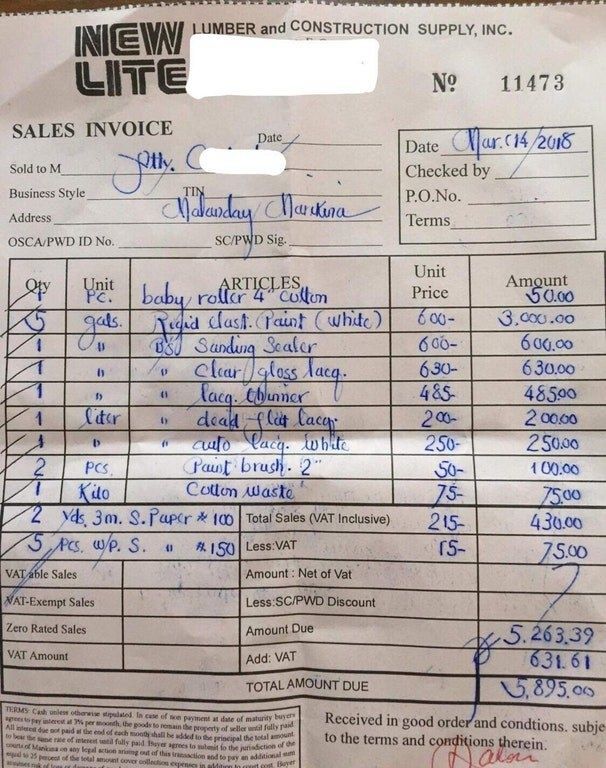
Handwritten Invoice

The Result: Contextual Extraction in Action

The AI doesn't just read pixels; it contextually understands the document's structure and the user's intent.

We ask the application: "Identify the articles that are being billed."
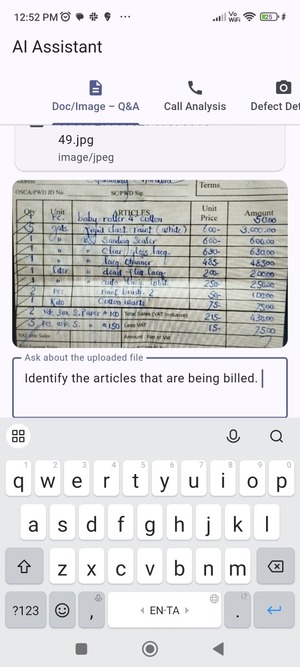
Mobile App AI Scanner

The result is a clean, structured, and accurate list of line items extracted directly from the messy handwritten table.
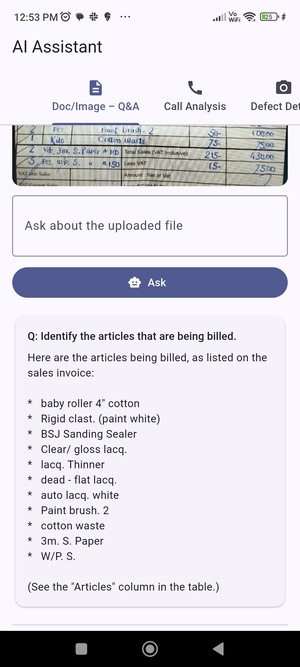
Mobile App AI Scanner

This is the power of a modern IDP solution: It transforms messy, human-generated documents into clean, structured data ready for your financial systems. This level of automation is a cornerstone of Future-Proof AI Systems: Scaling Enterprises Without Vendor Lock-In.


4. Behind the Curtain: SharkAI's Production Architecture for IDP

How did the system achieve this remarkable extraction accuracy on handwriting? It relies on a Hybrid AI Architecture—a fundamental principle of effective LLMOps (See our article: LLMOps: The Backbone of Enterprise-Ready AI).

The Multi-Layered Extraction Engine: A Deep Dive
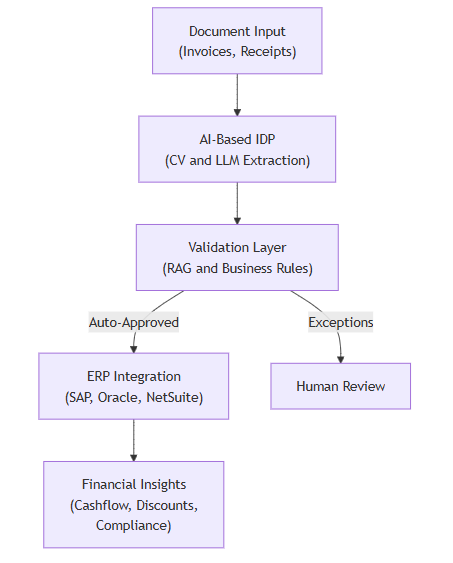
Multi-Layered Extraction Engine

4.1. Layer 1: Computer Vision (CV) and Layout Analysis

This initial stage is dedicated to understanding the visual structure and physical layout of the raw document, preparing the image for the subsequent language models. When the raw image file (PDF, JPEG, or scan) is ingested, the system first uses a classification model to rapidly identify the document type (e.g., Invoice, Receipt, Contract). Next, the structural analysis component, often powered by Object Detection Models or advanced document parsing APIs (like Azure Document Intelligence), identifies the coordinates and boundaries of key zones like tables, headers, and individual fields. The primary output of this layer is structured text from OCR, crucially accompanied by positional coordinates. This is vital, as it tells the LLM where on the page the text appeared, giving it critical visual context.

4.2. Layer 2: Generative AI (LLM) Contextual Extraction

This is the central intelligence layer where true understanding and high-accuracy extraction occur. Unlike traditional systems that rely solely on positional data, the Generative AI (LLM) core uses the structural context provided by Layer 1 to extract data based on meaning. We employ optimized LLMs (like Gemini or Azure OpenAI) with sophisticated Prompt Engineering. The prompt instructs the model: "From the following text and coordinates, extract the [Field Name] and return the result in this structured JSON schema." This contextual approach allows the system to successfully decode non-standard elements like handwriting or highly variable layouts, correctly mapping complex values to the intended field. The output is a Structured JSON Object containing all extracted fields, along with a Confidence Score for each field.

4.3. Layer 3: Retrieval-Augmented Generation (RAG) and Validation

This final, critical layer ensures data accuracy, compliance, and trustworthiness. Before the data is passed to the ERP, it must be cross-validated against internal, trusted data sources using RAG. The system queries a Vector Database (e.g., Pinecone, Milvus) storing embeddings of historical transactions, approved vendor lists, and active Purchase Orders (POs). This query confirms that the extracted Vendor ID is valid and the transaction details meet internal business rules. If the RAG check fails, or if the extraction Confidence Score from Layer 2 is below a predefined threshold, the data is automatically flagged and routed to a Human-in-the-Loop (HITL) review. Only upon successful completion of this final validation step is the verified and compliance-checked data packet released for Real-Time ERP Integration.


5. Real-Time ERP Integration: From Data to Decision

High accuracy is meaningless if the data is stuck in a silo. The transformation from "Invoice" to "Insight" is completed by establishing Real-Time ERP Integration.

  1. Secure API Gateways: The validated, structured data is instantly pushed via secure API Gateways (REST or SOAP) to your core ERP system (SAP, Oracle, NetSuite, etc.). This ensures robust and reliable data exchange, a key aspect of building a resilient AI platform.
  2. Automated 3-Way Matching: The IDP system enables the ERP to instantly and automatically perform the vital 3-way matching process: comparing the Invoice data (from IDP) against the Purchase Order (PO) and Goods Receipt (GR) records. This greatly reduces the need for manual review.
  3. Human-in-the-Loop (HITL): Only invoices that fail the 3-way match or have a low confidence score are routed to a human AP specialist for review via a dedicated ERP dashboard. This shifts AP staff from tedious data entry to exception management, focusing their expertise where it matters most.

This final step is what unlocks the ultimate business value: accurate, instant data allows for immediate cash flow visibility and the automated capture of early payment discounts.


6. Measurable ROI for AP Automation

The business case for IDP in Accounts Payable is compelling and quantifiable:

  • Cost Reduction: Achieve 40–70% reduction in invoice processing costs by minimizing manual effort.
  • Speed: Reduce invoice approval cycle time from days to hours, accelerating financial close.
  • Compliance: Maintain a clean, auditable data trail and minimize fraud risk with automated validation.
  • Strategic Shift: Reallocate AP staff to higher-value, strategic finance roles, moving beyond transactional tasks.

7. Conclusion: Start Your Automation Journey

Intelligent Document Processing is no longer a luxury; it is a necessity for enterprises seeking operational efficiency and competitive advantage. By leveraging the power of Gen AI, Computer Vision, and expert integration, SharkAI Solutions can help you turn your most complex, unstructured documents into valuable, real-time insights. Our approach ensures your AI systems are not just smart, but also secure and scalable, as detailed in our guide on Secure AI Infrastructure for Enterprises.

Ready to see how fast you can move from paper invoices to financial predictability?

Contact SharkAI Solutions Today

From Invoice to Insight: Automating Accounts Payable with Intelligent Document Processing (IDP) and Real-Time ERP Integration

Author: Dr. Shiney Jeyaraj

Published: 2025-11-28

Category: Process Automation

Reading Time: 12 min read

Tags: Process Automation, IDP, ERP Integration, Generative AI, Document Processing

Excerpt: Transform your Accounts Payable process with Intelligent Document Processing (IDP) powered by Generative AI. Learn how to automate invoice processing, reduce costs by 40-70%, and achieve real-time ERP integration for faster financial insights.

Article Content

1. Introduction: The High Cost of the AP Bottleneck For modern enterprises, the Accounts Payable (AP) process remains one of the final frontiers of manual inefficiency. The challenge isn't just processing invoices; it's the cost and delay caused by manual data entry , endless validation loops, and slow approval cycles. This "AP Bottleneck" leads to costly errors, non-compliance risk, and the inability to capture valuable early payment discounts. At SharkAI Solutions, we specialize in Gen AI Automation to solve these complex challenges. The key is Intelligent Document Processing (IDP) , which we define as: Intelligent Document Processing (IDP): The next evolution of OCR, leveraging Generative AI , Computer Vision (CV) , and Machine Learning to classify, extract, and validate data from complex, unstructured documents like invoices and receipts—transforming raw data into transaction-ready records. This guide details how IDP, powered by a modern AI architecture and seamlessly integrated with your ERP, moves AP from a cost center to a source of financial insight . 2. The Critical Flaw of Legacy Systems (OCR 1.0) For decades, enterprises relied on traditional Optical Character Recognition (OCR) systems. While effective for simple, static forms, they fail catastrophically in a modern AP environment: Inflexibility: They break when presented with new vendors or varied invoice layouts. High Maintenance: Requires constant, costly template re-creation. Low Accuracy on Unstructured Data: They struggle with complex tables, faint text, and, critically, handwriting . To achieve true automation and accuracy, especially with the diverse documents found in supply chain and manufacturing, a new, contextual approach is essential. This is where modern AI shines, as explored in our piece on Smarter Enterprise Search with Hybrid AI , which highlights the evolution beyond basic OCR. 3. Live Demonstration: Gen AI Decoding the Handwritten Invoice The ultimate test for any IDP system is its ability to handle unstructured data and handwriting . Our mobile AI assistant, powered by Generative AI, proves this capability. The Challenge Snapshot A common scenario involves processing a non-standard, handwritten sales invoice . A traditional OCR system would likely fail to correctly classify the document and accurately extract the line items, rendering the invoice useless for automated processing. We upload the invoice image to the SharkAI Mobile App and simply ask the assistant to analyze it: The Result: Contextual Extraction in Action The AI doesn't just read pixels; it contextually understands the document's structure and the user's intent. We ask the application: "Identify the articles that are being billed." The result is a clean, structured, and accurate list of line items extracted directly from the messy handwritten table. This is the power of a modern IDP solution: It transforms messy, human-generated documents into clean, structured data ready for your financial systems. This level of automation is a cornerstone of Future-Proof AI Systems: Scaling Enterprises Without Vendor Lock-In . 4. Behind the Curtain: SharkAI's Production Architecture for IDP How did the system achieve this remarkable extraction accuracy on handwriting? It relies on a Hybrid AI Architecture —a fundamental principle of effective LLMOps (See our article: LLMOps: The Backbone of Enterprise-Ready AI ). The Multi-Layered Extraction Engine: A Deep Dive 4.1. Layer 1: Computer Vision (CV) and Layout Analysis This initial stage is dedicated to understanding the visual structure and physical layout of the raw document, preparing the image for the subsequent language models. When the raw image file (PDF, JPEG, or scan) is ingested, the system first uses a classification model to rapidly identify the document type (e.g., Invoice, Receipt, Contract). Next, the structural analysis component, often powered by Object Detection Models or advanced document parsing APIs (like Azure Document Intelligence), identifies the coordinates and boundaries of key zones like tables, headers, and individual fields. The primary output of this layer is structured text from OCR, crucially accompanied by positional coordinates . This is vital, as it tells the LLM where on the page the text appeared, giving it critical visual context. 4.2. Layer 2: Generative AI (LLM) Contextual Extraction This is the central intelligence layer where true understanding and high-accuracy extraction occur. Unlike traditional systems that rely solely on positional data, the Generative AI (LLM) core uses the structural context provided by Layer 1 to extract data based on meaning . We employ optimized LLMs (like Gemini or Azure OpenAI ) with sophisticated Prompt Engineering . The prompt instructs the model: "From the following text and coordinates, extract the [Field Name] and return the result in this structured JSON schema." This contextual approach allows the system to successfully decode non-standard elements like handwriting or highly variable layouts, correctly mapping complex values to the intended field. The output is a Structured JSON Object containing all extracted fields, along with a Confidence Score for each field. 4.3. Layer 3: Retrieval-Augmented Generation (RAG) and Validation This final, critical layer ensures data accuracy, compliance, and trustworthiness. Before the data is passed to the ERP, it must be cross-validated against internal, trusted data sources using RAG . The system queries a Vector Database (e.g., Pinecone, Milvus) storing embeddings of historical transactions, approved vendor lists, and active Purchase Orders (POs). This query confirms that the extracted Vendor ID is valid and the transaction details meet internal business rules. If the RAG check fails, or if the extraction Confidence Score from Layer 2 is below a predefined threshold, the data is automatically flagged and routed to a Human-in-the-Loop (HITL) review. Only upon successful completion of this final validation step is the verified and compliance-checked data packet released for Real-Time ERP Integration . 5. Real-Time ERP Integration: From Data to Decision High accuracy is meaningless if the data is stuck in a silo. The transformation from "Invoice" to "Insight" is completed by establishing Real-Time ERP Integration . Secure API Gateways: The validated, structured data is instantly pushed via secure API Gateways (REST or SOAP) to your core ERP system (SAP, Oracle, NetSuite, etc.). This ensures robust and reliable data exchange, a key aspect of building a resilient AI platform . Automated 3-Way Matching: The IDP system enables the ERP to instantly and automatically perform the vital 3-way matching process: comparing the Invoice data (from IDP) against the Purchase Order (PO) and Goods Receipt (GR) records. This greatly reduces the need for manual review. Human-in-the-Loop (HITL): Only invoices that fail the 3-way match or have a low confidence score are routed to a human AP specialist for review via a dedicated ERP dashboard. This shifts AP staff from tedious data entry to exception management , focusing their expertise where it matters most. This final step is what unlocks the ultimate business value: accurate, instant data allows for immediate cash flow visibility and the automated capture of early payment discounts . 6. Measurable ROI for AP Automation The business case for IDP in Accounts Payable is compelling and quantifiable: Cost Reduction: Achieve 40–70% reduction in invoice processing costs by minimizing manual effort. Speed: Reduce invoice approval cycle time from days to hours, accelerating financial close. Compliance: Maintain a clean, auditable data trail and minimize fraud risk with automated validation. Strategic Shift: Reallocate AP staff to higher-value, strategic finance roles, moving beyond transactional tasks. 7. Conclusion: Start Your Automation Journey Intelligent Document Processing is no longer a luxury; it is a necessity for enterprises seeking operational efficiency and competitive advantage. By leveraging the power of Gen AI, Computer Vision, and expert integration, SharkAI Solutions can help you turn your most complex, unstructured documents into valuable, real-time insights. Our approach ensures your AI systems are not just smart, but also secure and scalable, as detailed in our guide on Secure AI Infrastructure for Enterprises . Ready to see how fast you can move from paper invoices to financial predictability? Contact SharkAI Solutions Today